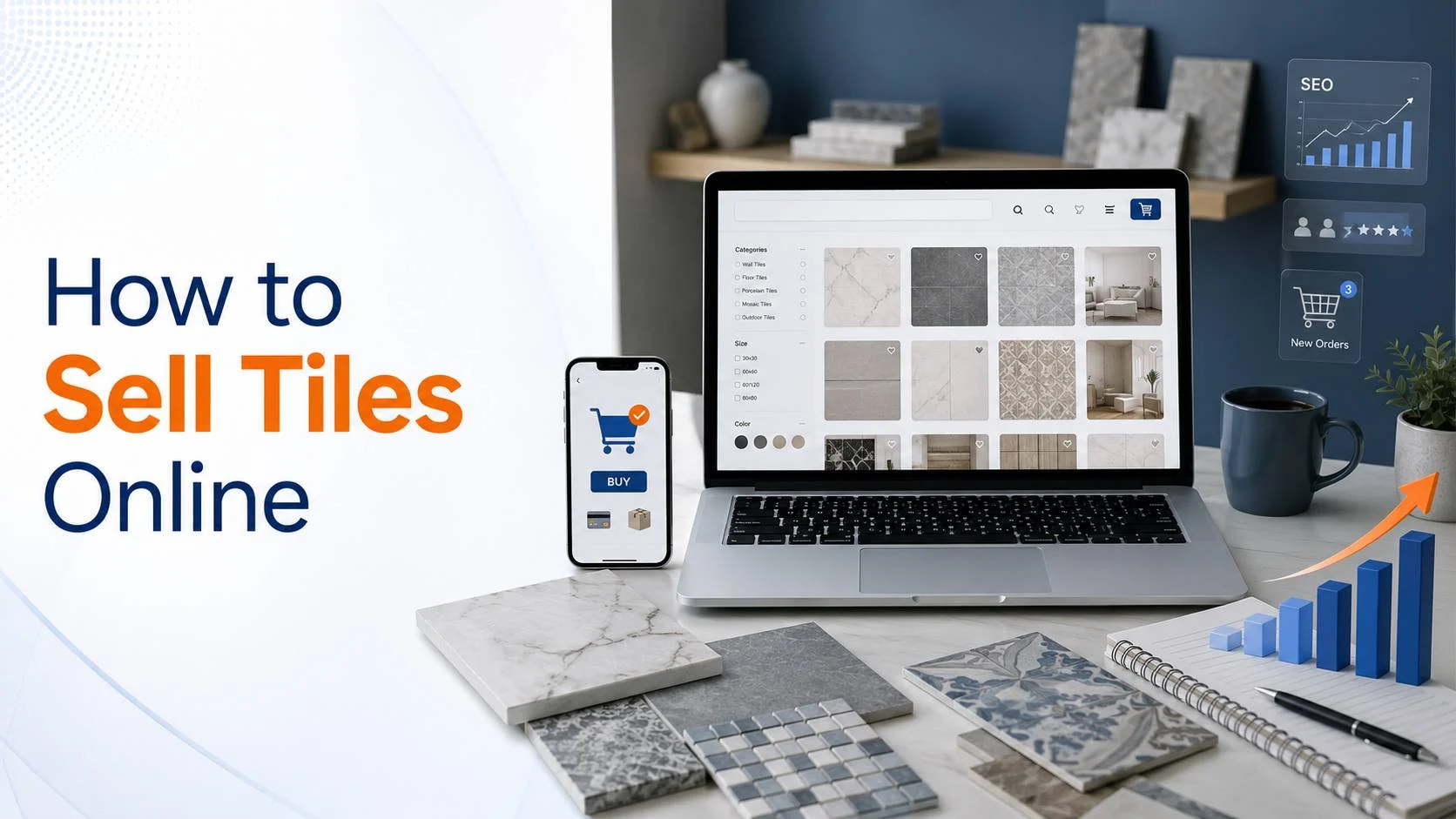
How to Sell Tiles Online
The demand for buying building materials online has grown rapidly, and tiles are no exception. Whether you manufacture tiles, run a wholesale business, or own a retail showroom, selling tiles online can help you reach customers beyond your local market.
However, selling tiles is different from selling clothing or electronics. Customers need detailed product information, high-quality images, and confidence that their order will arrive safely.
This guide explains everything you need to know about selling tiles online successfully.
Why Sell Tiles Online?
Selling tiles online offers several advantages:
Reach customers across your city or country.
Generate leads even when your showroom is closed.
Reduce dependence on walk-in customers.
Showcase your complete catalog instead of limited showroom space.
Build trust through reviews, blogs, and project galleries.
Many homeowners, architects, interior designers, and contractors now research products online before making a purchase.
Step 1: Choose What Type of Tiles You Want to Sell
Before creating an online store, define your product range.
Popular categories include:
Ceramic tiles
Porcelain tiles
Vitrified tiles
Wall tiles
Floor tiles
Bathroom tiles
Kitchen tiles
Outdoor tiles
Designer tiles
Mosaic tiles
Instead of listing hundreds of products immediately, start with your best-selling collections and expand gradually.
Step 2: Create an Online Store
Your website becomes your digital showroom.
A professional tile website should include:
Product categories
High-quality images
Multiple viewing angles
Size specifications
Finish details
Material information
Application areas
Price or quote request option
Contact information
If you sell wholesale, allow customers to request quotations instead of showing fixed prices.
Step 3: Write Detailed Product Descriptions
Many tile businesses copy manufacturer descriptions. This creates duplicate content and makes it difficult to rank in search engines.
Instead, explain:
Material
Tile dimensions
Thickness
Surface finish
Water resistance
Slip resistance
Indoor or outdoor use
Recommended applications
Maintenance tips
Unique descriptions improve both SEO and customer confidence.
Step 4: Use High-Quality Images
Customers cannot touch or inspect tiles online, so visuals become your biggest sales tool.
Include:
Front view
Close-up texture
Installed room photos
Different lighting conditions
Size comparison
Pattern variations
Professional photography significantly improves conversion rates.
Step 5: Optimize Your Website for SEO
Most customers begin with Google searches such as:
Ceramic tiles near me
Floor tiles online
Bathroom tiles
Porcelain tile supplier
To improve visibility:
Use descriptive page titles.
Write helpful product descriptions.
Optimize image alt text.
Add internal links between related pages.
Publish educational blog articles.
Improve website speed.
SEO helps attract customers without paying for every click.
Step 6: Publish Helpful Content
Content marketing establishes authority and attracts organic traffic.
Useful topics include:
How to choose floor tiles
Ceramic vs porcelain tiles
Best tiles for bathrooms
Tile installation tips
Tile maintenance guide
Modern tile design trends
Tile buying checklist
These articles answer customer questions before they make a purchase.
Step 7: Promote Your Tile Business
Even the best website needs marketing.
Effective channels include:
Google Search
Optimize your website for relevant keywords so customers can discover your products organically.
Social Media
Share:
Installation videos
Before-and-after projects
Customer testimonials
Design inspiration
New collections
Visual platforms work especially well for tile businesses.
Email Marketing
Build an email list of contractors, architects, builders, and previous customers.
Send:
New arrivals
Seasonal offers
Design inspiration
Product launches
Step 8: Handle Shipping Carefully
Tiles are heavy and fragile.
To reduce damage:
Use reinforced packaging.
Separate tiles with protective material.
Clearly label fragile shipments.
Work with experienced logistics providers.
Insure high-value orders.
Providing tracking information also improves customer satisfaction.
Step 9: Build Customer Trust
Customers often spend thousands on tile purchases.
Increase confidence by displaying:
Customer reviews
Project galleries
Installation photos
Return policy
Secure payment options
Contact information
Business address
Certifications, if applicable
Trust signals often influence buying decisions as much as pricing.
Step 10: Measure and Improve
Monitor your website regularly.
Key metrics include:
Organic traffic
Most visited products
Conversion rate
Bounce rate
Top-performing blog articles
Customer inquiries
Average order value
Use this information to improve your website over time.
Common Mistakes to Avoid
Many new tile businesses make these mistakes:
Using manufacturer descriptions.
Uploading low-quality images.
Ignoring SEO.
Providing incomplete specifications.
Offering poor mobile experiences.
Not updating inventory.
Slow response to inquiries.
Weak product categorization.
Avoiding these issues gives your business a competitive advantage.
Best Platforms for Selling Tiles Online
The right platform depends on your business model.
Your own website
Best for building your brand
Full control over pricing and customer relationships
Online marketplaces
Quick access to buyers
Lower marketing effort
More competition
Social commerce
Great for showcasing new collections
Useful for generating inquiries
Many successful businesses combine all three approaches instead of relying on a single sales channel.
Frequently Asked Questions
Can tiles be sold online?
Yes. Many manufacturers, wholesalers, and retailers successfully sell tiles online through their websites and digital marketplaces. Detailed product information, quality images, and reliable shipping are essential.
Is selling tiles online profitable?
Selling tiles online can be profitable because it expands your customer base beyond local buyers while reducing dependence on showroom visits.
What is the best way to market tiles online?
A combination of SEO, content marketing, social media, email marketing, and paid advertising typically delivers the best results.
Should I display tile prices on my website?
Retail businesses usually benefit from displaying prices. Wholesale suppliers often prefer quotation requests because pricing may vary based on quantity and location.
Conclusion
Learning how to sell tiles online is about more than launching a website. Success comes from presenting your products professionally, creating useful content, optimizing for search engines, and providing an excellent customer experience.
Focus on building trust, publishing helpful information, and continuously improving your online store. Over time, your website can become a reliable source of leads and sales, helping your tile business grow far beyond your local market.